

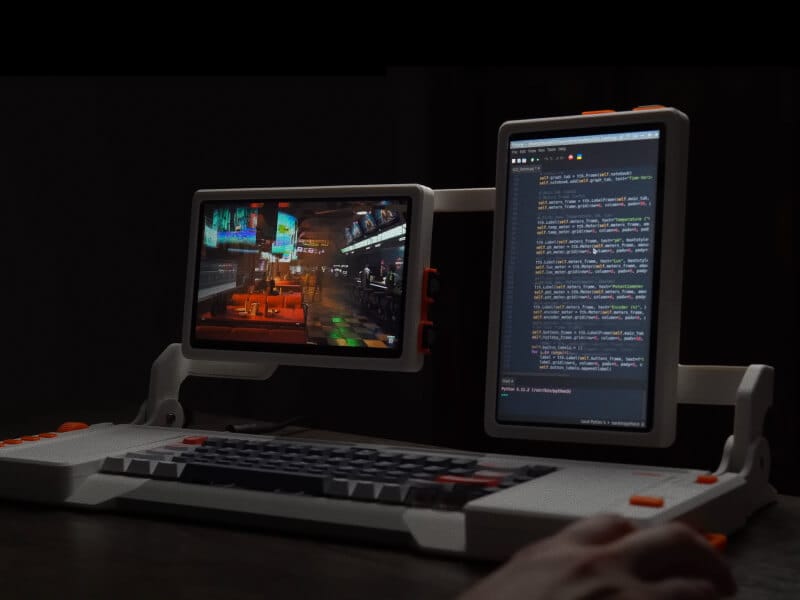
A self-taught builder has designed a custom Raspberry Pi–powered “cyberstation”—a modular development platform aimed at prototyping, programming, and hardware experimentation. Positioned somewhere between a cyberdeck and a workstation, the project prioritizes flexibility, repairability, and hands-on control.
Disclaimer Before You Build
The creator makes it clear: this is not a beginner project. It involves:
- Advanced soldering (including SMT components)
- Custom wiring and power management
- Higher-than-average cost
It’s also a version one prototype, meaning there are known inefficiencies and areas for improvement. Anyone attempting the build is expected to verify the design and take responsibility for safety.
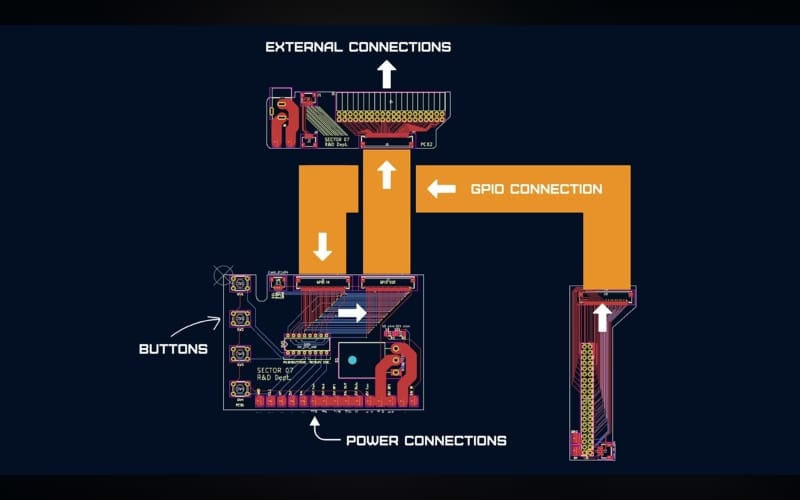
Design Vision
What started as a personal cyberdeck concept evolved into a full “cyberstation”—larger, modular, and more practical for real development work.
The core idea:
A dedicated, portable workstation for building and testing Raspberry Pi projects without constantly rewiring setups.
Key Features
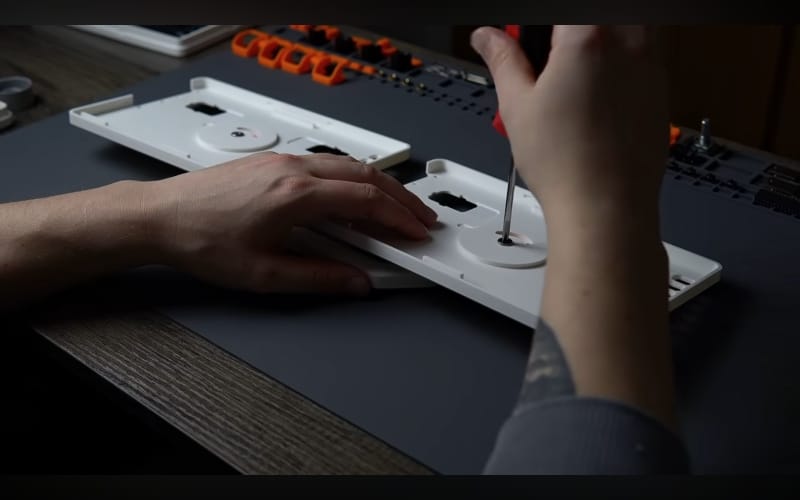
Modular 3D-Printed Design
- Fully FDM 3D-printed enclosure and buttons
- Snap-fit assembly (minimal screws)
- Easy to open, repair, and modify
Dual 9-Inch Touchscreens
- Two displays with portrait/landscape rotation
- Useful for:
- Coding on one screen
- Viewing pinouts, docs, or logs on the other
- Touch support included, though optional in practice
Raspberry Pi Compatibility
Supports both:
- Raspberry Pi 4
- Raspberry Pi 5
Minor hardware differences (like USB placement) require separate printed parts, but overall compatibility is maintained.
Expanded Connectivity
Internal USB Hub
- Handles high-power peripherals better than the Pi alone
- Includes a custom power injector to stabilize current
External Ports
- I2C port for sensors (supports daisy chaining)
- Full 40-pin GPIO breakout
- USB expansion for accessories (GPS, storage, radios, etc.)
Programmable Controls
- 4 GPIO buttons
- Rotary encoder knob
- Linear slider (converted to I2C)
These inputs can:
- Control system functions (volume, scrolling, macros)
- Simulate real-world inputs for testing (e.g., sensor values)
Power System
- Uses an N-channel MOSFET circuit instead of a direct switch
- Supports up to 6A power draw
- Designed to safely handle high-load components like displays
Quick-Swap Raspberry Pi System
- Built-in ejection handles for fast removal
- Direct access to:
- USB connections
- HDMI
- MicroSD card
This supports rapid iteration—swap boards or storage without disassembling the unit.
Tools & Skills Required
Tools
- Soldering iron
- 3D printer
- Screwdrivers + hex tools
Skills
- 3D printing and assembly
- Soldering (SMT + through-hole)
- Basic electronics
- Programming
Limitations
- Expensive for a DIY build
- Power system is pushed close to limits
- Requires careful assembly and troubleshooting
- Still an early prototype
 sector07-dev