
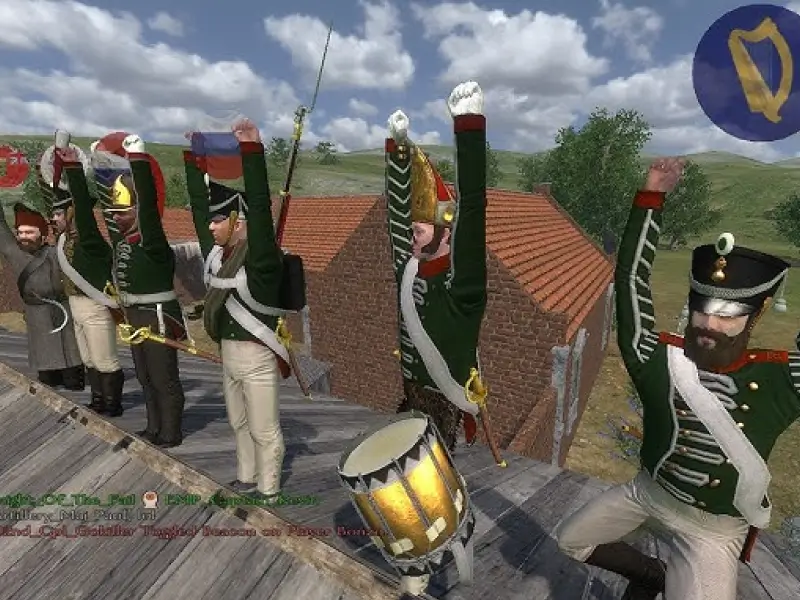
The user’s team was locked in a stalwart defense of a sprawling house, walls high and guns trained outward. Amid musket smoke and cannon thunder, one player noticed something completely out of place: a piano. In a game full of bayonets, sabers, and battlefield orders, the piano was an absurd oddity a relic that shouldn’t be there… and yet it was.
Instead of reloading his musket, the player approached the piano and began to play. First a note, then a few more. The battlefield shifted. The fight faded out of focus.
Others noticed too. Musicians bagpipers, drummers, horn‑blowers dropped what they were doing and poured down the stairs to join him. Soon, what had been a tense defense became an impromptu courtyard concert. Nearly the whole team was gathered, crouch‑dancing in place, laughing and swaying to the makeshift melody.
It was surreal a reprieve from strategy, a pause in combat, a moment of pure player‑driven spectacle. Then reality snapped back in the most brutal way imaginable.
A cannonball hammered through the wall, smashing the piano to splinters and killing the pianist instantly. Just like that, the music stopped.
But the story didn’t end there. The chat lit up with something uncanny:
“They killed the piano man.”
A few moments passed then another message:
“FORWARD, FOR THE PIANO MAN!”
It was an order, a rallying cry, a declaration. Without hesitation, players poured through the new breach in the wall, shouting the phrase into chat as they charged. What had started as a whimsical detour became the spark that ignited a fresh assault on the enemy.
In a game defined by strategy and warfare, the musicians’ folly became legend a reminder that in multiplayer worlds, the unexpected is often the most memorable part of the fight.