


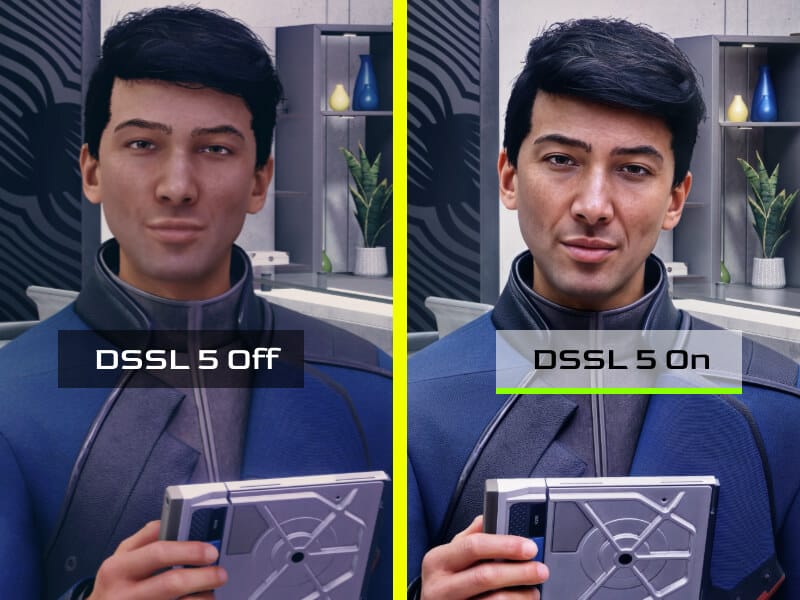
In a recent hands-on preview, DLSS 5 didn’t just improve performance it changed how games look entirely. We’re not talking sharper edges or better FPS. We’re talking AI stepping in and rewriting the visuals in real time.
This Doesn’t Look Like the Same Game Anymore
Early demos showed DLSS 5 transforming games like Resident Evil Requiem and Starfield with dramatic lighting upgrades.
But instead of subtle improvements, players saw something else:
- Faces looked different
- Lighting felt “too perfect”
- Some scenes looked straight-up AI generated
One reaction summed it up:
“It looks like a completely different person.”
That’s not exactly what gamers expected from a graphics upgrade.
From Upscaling to AI Rewriting Reality
Previous versions of DLSS focused on performance render lower, upscale higher.
DLSS 5? It goes further.
- Uses AI to generate lighting and materials
- Enhances scenes beyond what developers originally created
- Runs in real time while you play
In simple terms:
The game you’re playing might not be exactly what the developer made.
Gamers Are Split (And Some Are Not Happy)
The reaction online has been intense.
Some players love the realism. Others are calling it:
- “AI filter”
- “Fake lighting”
- “Breaking the art style”
Critics say it risks overwriting the developer’s vision with AI-generated visuals.
Even worse? Some examples made characters look… off. Almost like modded or altered versions of themselves.
Nvidia Says: “You’re Still in Control”
Nvidia insists developers still have full control over how DLSS 5 is used.
But here’s the real question:
If AI can change everything… will developers actually stay in control?
The Bigger Problem No One Is Talking About
This isn’t just about graphics.
It’s about who decides what a game should look like:
- The developer?
- The player?
- Or Nvidia’s AI?
DLSS 5 might be the moment gaming shifts from rendering reality to generating it.
And not everyone is ready for that.