
The Truth About the “Burning” of the Great Library of Alexandria — And Why the Popular Story Is Mostly Myth
Was the Great Library of Alexandria really destroyed in a single blaze? History tells a more complex story about loss, myth, and gradual decline.
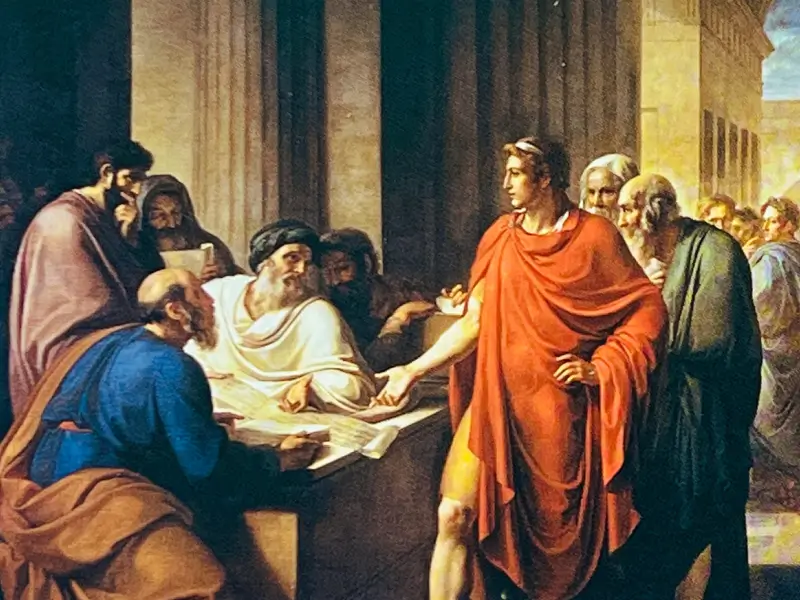
The library of Alexandria is often remembered as the greatest repository of knowledge in the ancient world and as one of history’s most tragic losses. Popular stories describe its sudden destruction in a single catastrophic fire, but historical evidence suggests a slower, more complicated decline shaped by politics, neglect, and changing priorities. Understanding what really happened to this legendary institution reveals more about how knowledge survives or disappears over time.
Most of us grew up hearing a dramatic story
A Christian mob marched in, torched the Library of Alexandria, and humanity lost all ancient knowledge in one fiery night.
It’s the kind of tale that makes for emotional TV and motivational speeches but according to historians, it’s almost entirely fiction.
So Where Did This Story Come From?
Believe it or not, the “great burning” narrative isn’t from ancient historians it mostly comes from 18th‑century Enlightenment writers like Edward Gibbon, who had ideological reasons to paint religion (especially Christianity) as anti‑intellectual.
Because Gibbon’s Decline and Fall of the Roman Empire was hugely influential, later writers including Carl Sagan in Cosmos repeated the story, and it eventually became the version most people know.
The Real History Is Way Messier
- The so‑called Great Library wasn’t one giant building filled with bookshelves like a modern library.
- It was part of a larger research institution, the Mouseion, where scholars lived, studied, and copied texts.
- It likely held a huge number of scrolls but ancient sources differ wildly (from tens of thousands to hundreds of thousands).
Did It Burn Down in a Single Blaze?
Not exactly. There were fires and disruptions but not one cataclysmic event where all knowledge vanished in an instant:
- Julius Caesar’s siege of Alexandria (48 BCE)
- Caesar ordered ships in the harbor burned during a civil war.
- Flames spread, and some of the library’s collection — probably stored in nearby warehouses was likely damaged or destroyed.
- Later Fires, Decline, and War
- The library wasn’t instantly wiped out. Over centuries, Alexandria faced political chaos, funding cuts, and repeated conflict.
- Temple of Serapis (391 CE)
- A daughter library at the Serapeum was destroyed amid religious conflict in the late Roman Empire.
- This event is likely where the myth of a Christian mob burning the “Great Library” took shape but there’s no evidence that a significant library existed there by this point.
- Later Rumors (and Myths)
- Stories that Muslim conquerors destroyed the library or burned scrolls to heat bathhouses are almost certainly later inventions with no credible historical support.
So What Was Lost?
Something was lost many books, scrolls, and works we’ll never know but it wasn’t a single annihilation of all ancient knowledge.
There were many libraries in the ancient world (in Pergamon, Rome, etc.), and scholarship continued elsewhere. The decline of the Library of Alexandria was gradual, complex, and messy, not a single fiery catastrophe.
Why the Myth Lives On
The dramatic version endures because it fits a powerful narrative:
🏛️ “Rational knowledge destroyed by blind zealotry.”
But like many historical myths, it turns out to be more about modern ideology and storytelling than what really happened in antiquity.
Tags: history, ancient-world, libraries, myths, knowledge-loss