How Axiom Space Is Reinventing Cloud Computing in Earth Orbit
Orbital data centers could shape how governments, industries, and future space missions operate both in orbit and on distant worlds.
A new frontier in tech is unfolding above our heads. For decades, humanity has relied on Earth-based data centers to power everything from social apps to artificial intelligence. Now, a Houston-based company is building cloud computing infrastructure in space itself. This isn’t science fiction it’s happening as the next wave of commercial space innovation.
What Are Orbital Data Centers?
Orbital Data Centers (ODCs) are essentially cloud computing facilities in low-Earth orbit (LEO). Built by Axiom Space, these nodes bring scalable storage, real-time processing, and AI capabilities directly into space bypassing traditional reliance on ground-based servers entirely.
How ODCs Work
- Satellites collect raw data from Earth imagery to scientific telemetry and send it to a nearby ODC node using optical links or relay satellites.
- Once received, the in-orbit compute hardware processes and analyzes data right there, with much lower delay than sending it back to Earth.
- The processed, higher-value output can be sent back to Earth, to another orbiting node, or stored for delayed transmission giving operators greater flexibility and resilience.
Built for Real-World Use Cases
- Low-latency AI and machine learning in space
- Cybersecurity and autonomous satellite operations
- Global data resilience and sovereignty
- Real-time analytics directly on orbiting platforms
Unlike today’s data centers, these systems are designed to be physically isolated, solar-powered, and capable of operating independently if Earth communication is interrupted a significant step toward trusted, borderless data infrastructure in space.
Progress in Orbit: From Prototype to Production
Axiom Space isn’t just talking about orbital cloud it’s already building it:
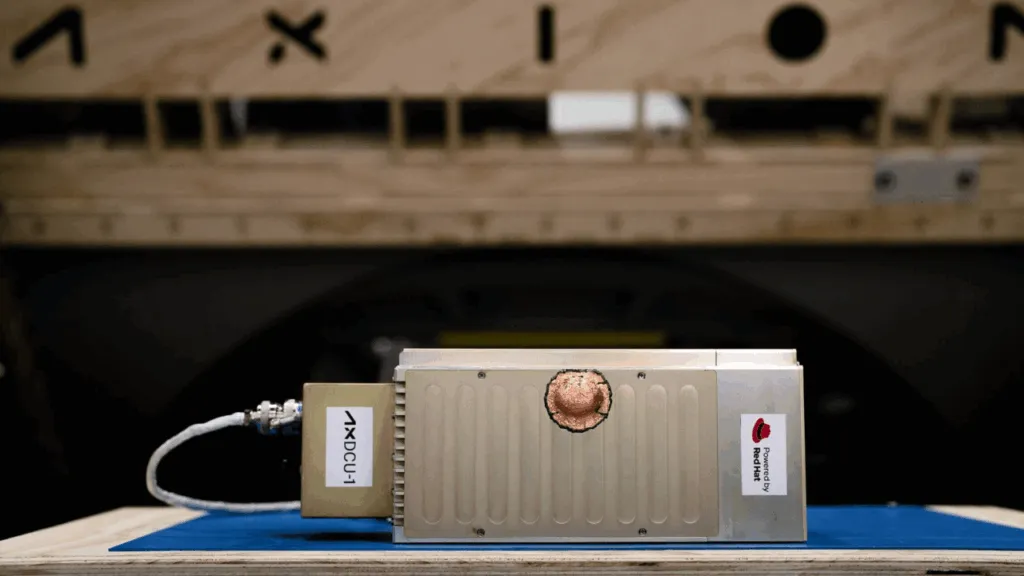
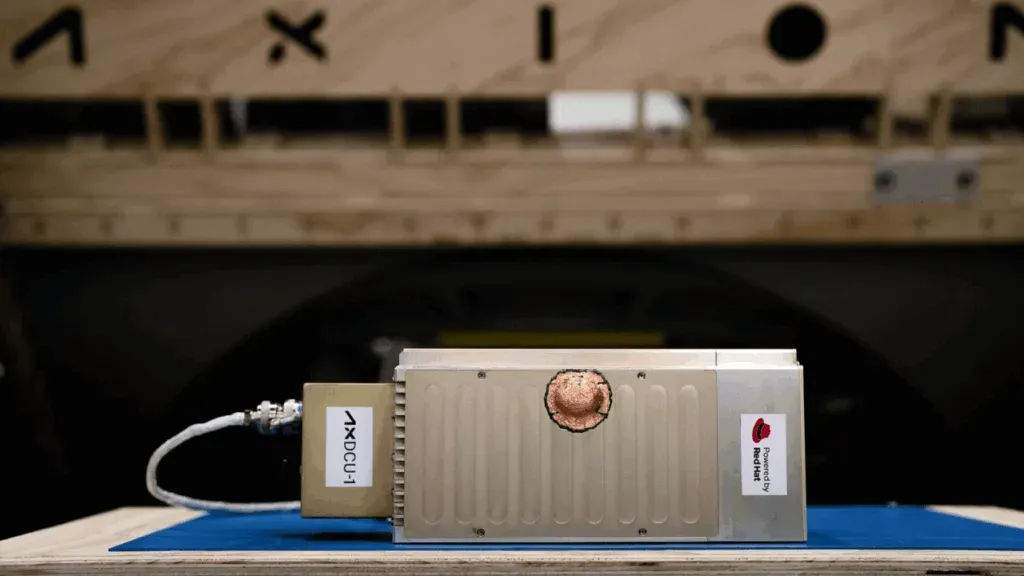
- AxDCU-1, a prototype data processing unit, was sent to the International Space Station to validate early ODC technology, including cloud software and AI workflows in microgravity.
- In January 2026, the first two dedicated ODC nodes launched to low-Earth orbit, linking with optical relay networks for high-speed data transfer.
- Axiom is pairing with optical network providers like Kepler Communications and Skyloom to enable multi-gigabit connectivity between satellites, data centers, and Earth.
- Funding from groups like the Texas Space Commission is helping push this network architecture forward while demand grows from national security, commercial, and international users.
Why It’s a Game Changer
1. Space Becomes a Cloud Platform
Traditional cloud computing is anchored on Earth. Placing servers in orbit could:
- Reduce latency for space-to-space communication
- Enable autonomous satellite decisions
- Support large AI and data workloads without waiting for Earth links
This shift opens possibilities for real-time space weather forecasting, secure space operations, and even AI-driven robotics beyond Earth orbit.
2. A New Backbone for the Space Economy
Orbital data centers could become the digital infrastructure that supports:
- Commercial space stations
- Lunar missions and Mars habitats
- Earth observation networks
- Defense and intelligence systems
By creating an orbital cloud network, Axiom and its partners are pushing toward a future where digital and physical infrastructure extend seamlessly from Earth to space.
3. Resilience and Security at a New Level
Data centers in orbit aren’t subject to earthquakes, floods, or regional network outages. Their unique position also offers novel cybersecurity architectures that could safeguard critical systems against terrestrial threats.
What Comes Next
Axiom Space plans to continue expanding its orbital infrastructure through the late 2020s, building out higher-capacity nodes and interconnecting them into a global mesh. Over time, these networks could form the backbone of a true space-based cloud ecosystem.
Takeaway
Forget Earth-bound servers the future of cloud computing may be circling overhead. Axiom Space’s Orbital Data Centers are laying the groundwork for a new era where data, AI, and connectivity aren’t limited by terrestrial infrastructure. As satellite constellations, commercial stations, and deep-space missions multiply, this orbiting digital infrastructure could become as vital as fiber optic cables and data farms on the ground.
Sources:
Axiom Space — https://www.axiomspace.com/orbital-data-center#how-it-works
Axiom Space press releases — https://www.axiomspace.com/release/orbital-data-center
 Alun Williams