

DOOM Eternal is no longer new.
The launch noise has long faded, the discourse has settled, and the hot takes have cooled into something more useful: perspective.
Released into a gaming landscape obsessed with live-service roadmaps, seasonal grinds, and endlessly expandable systems, DOOM Eternal chose a different path. It doubled down on structure. On mastery. On friction. Years later, that decision reads less like stubbornness and more like clarity.
This isn’t a nostalgia piece or a victory lap. It’s a re-evaluation what DOOM Eternal actually is when stripped of hype, updates, and launch-era arguments. And more importantly, why it still matters in 2026.
What Is DOOM Eternal?
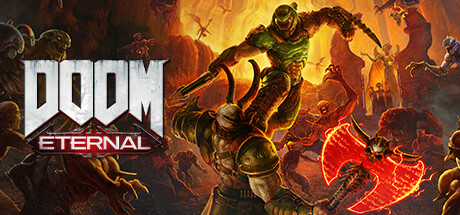
Developed by id Software and released as a sequel to 2016’s DOOM reboot, DOOM Eternal is a single-player–first, high-speed first-person shooter rooted in old-school arena design but rebuilt with modern systems thinking.
At its core, the game places you in the role of the Doom Slayer less a character, more a force tasked with halting a demonic invasion across Earth and beyond. The setting blends industrial sci-fi, occult architecture, and mythic imagery, leaning heavily into its own absurdity without turning ironic.
Within the DOOM franchise, Eternal represents a pivot. Where DOOM (2016) emphasized raw flow and player expression, Eternal formalized that flow into a tightly governed combat language. Every mechanic has a purpose. Every system feeds another.
Core features include:
- Combat style: Fast-paced, arena-based FPS built around constant movement and resource management
- Progression systems: Weapon mods, suit upgrades, and mastery challenges
- Narrative focus: Environmental storytelling supplemented by codex entries and cutscenes
- Multiplayer: Asymmetric PvP via Battlemode
- Visual and technical highlights: 60+ FPS performance, dense enemy animations, and aggressive art direction
DOOM Eternal doesn’t try to be broad. It tries to be exact.
DOOM Eternal Gameplay Mechanics: Combat, Progression, and Systems
The defining trait of DOOM Eternal gameplay mechanics is intentional pressure. The game demands engagement on its own terms, and it rarely compromises.
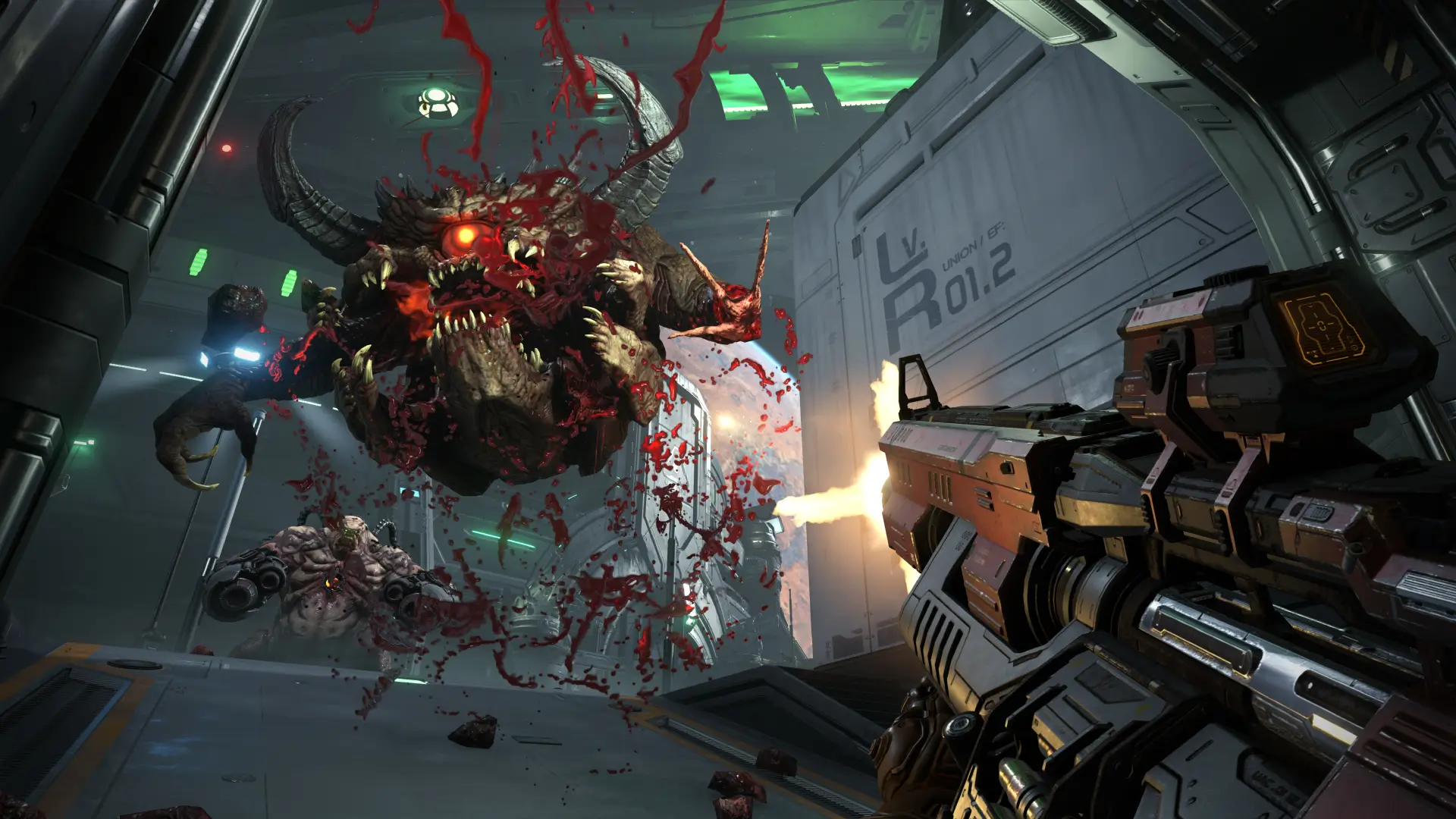
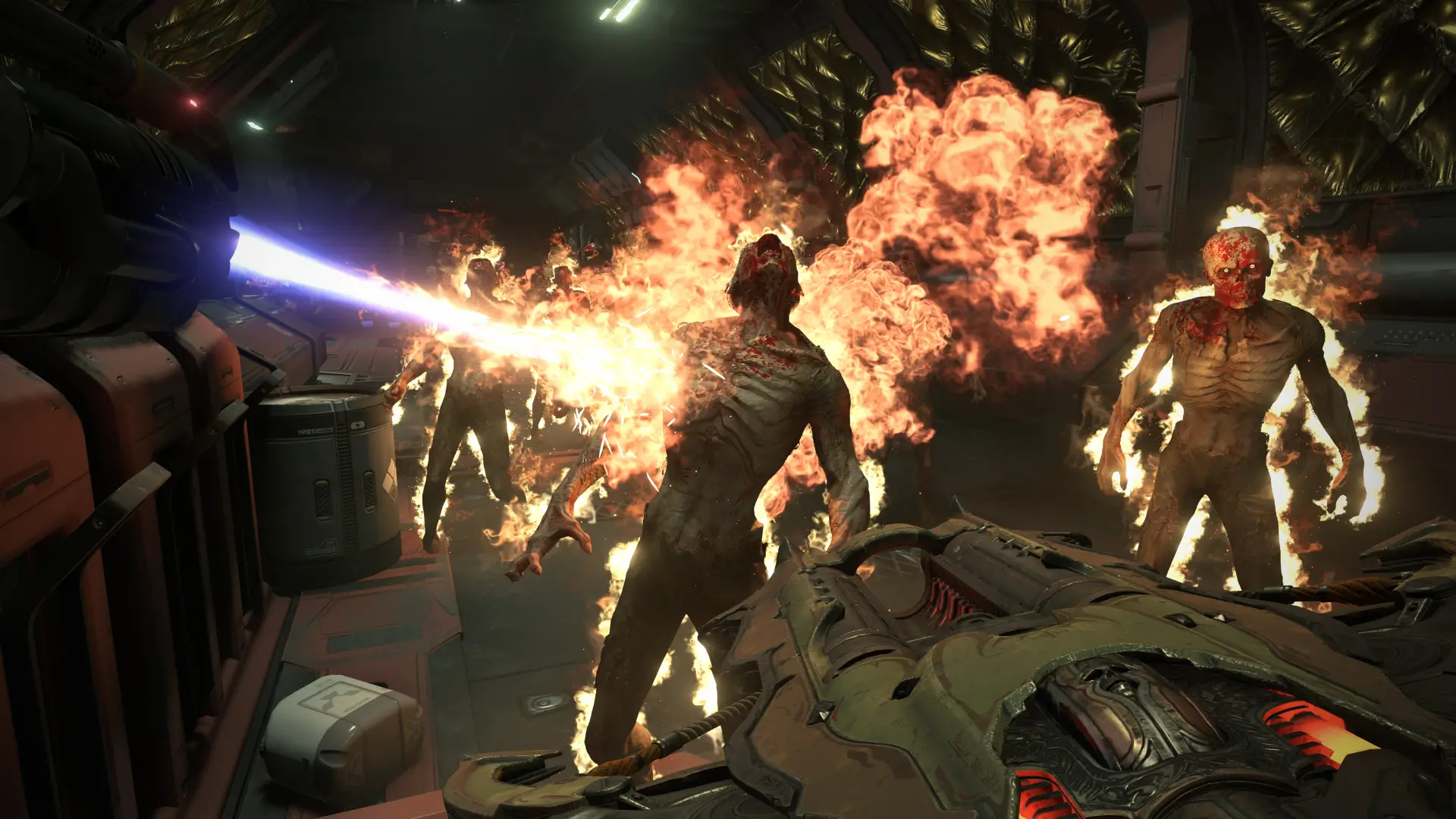
Combat is built around a loop that forces the player to rotate tools constantly. Ammo is scarce by design, pushing reliance on the chainsaw. Health comes from close-range eliminations. Armor is generated through controlled enemy ignition. Each system interlocks, ensuring that standing still or relying on a single weapon is punished quickly.
This is not a power fantasy built on excess. It’s one built on discipline.
The DOOM Eternal combat system rewards spatial awareness, enemy prioritization, and mechanical fluency. Encounters are closer to combat puzzles than power trips. Enemy types are tuned to counter specific player behaviors, encouraging rapid adaptation rather than memorization.
Pacing is aggressive but calculated. Arenas escalate in complexity, layering verticality, environmental hazards, and mixed enemy compositions. Difficulty settings don’t merely adjust damage values; they alter the margin for error. On higher difficulties, Eternal becomes less about reaction speed and more about execution.
Player agency exists—but within boundaries. Eternal gives you many tools, but it’s explicit about when and how they should be used. That rigidity was controversial at launch, yet it’s also why the game remains mechanically legible years later.
Few shooters since have matched its clarity of intent.
Story and Lore: Does It Hold Up?
DOOM Eternal’s story is polarizing by design. It expands the mythos dramatically, reframing the Doom Slayer not just as a survivor, but as a legend embedded in cosmic history.
For players invested in DOOM Eternal story and lore, the game offers depth sometimes at the expense of subtlety. Codex entries outline political hierarchies, ancient wars, and metaphysical systems that border on the operatic. It’s maximalist lore in a franchise that once thrived on implication.
Does it hold up? That depends on expectation.
Eternal respects its canon by leaning into excess rather than undermining it. It doesn’t demystify the Slayer so much as elevate him beyond relatability. For story-driven players, the appeal isn’t emotional resonance it’s thematic consistency. The narrative reinforces the game’s mechanical philosophy: purpose over personality.
Environmental storytelling remains strong. Levels communicate history through architecture, scale, and contrast. The world feels constructed, not procedural. Even if the lore occasionally overreaches, it never feels lazy.
In 2026, Eternal’s story reads less like indulgence and more like a snapshot of a moment when developers were willing to commit fully to tone without hedging for mass appeal.
DOOM Eternal Multiplayer Review
Multiplayer was never DOOM Eternal’s primary draw, and the years have clarified that reality.
Battlemode, the game’s asymmetric PvP offering, pits one fully equipped Slayer against two player-controlled demons. Conceptually, it’s inventive. In practice, it struggled to maintain momentum.
From a DOOM Eternal multiplayer review perspective, the mode suffered from a steep learning curve and a narrow audience. Balance patches improved the experience, but the player base steadily contracted. Matchmaking in 2026 is functional but inconsistent, depending heavily on region and time.
Replayability exists for dedicated players, but community activity is limited. Eternal’s multiplayer isn’t a failure it’s a reminder that not every game benefits from competitive extensions.
Where the single-player thrives on precision and control, multiplayer exposes how difficult that philosophy is to scale across human unpredictability.
Is DOOM Eternal Worth Playing in 2026?
So, is DOOM Eternal worth playing today?
Yes but not universally.
For players seeking open-ended sandboxes, narrative choice, or social progression systems, Eternal may feel rigid. It doesn’t bend. It doesn’t negotiate. It expects commitment.
But for players craving a focused, mechanically dense experience one that values mastery over accumulation DOOM Eternal remains exceptional. Few modern shooters offer such a complete, self-contained arc. No seasons. No content drip. Just a finished design.
Technically, the game has aged well. Performance remains strong on modern hardware. Visual clarity, animation readability, and sound design still exceed many newer releases. More importantly, its systems haven’t been diluted by updates chasing engagement metrics.
In a market increasingly shaped by retention models, Eternal’s refusal to evolve endlessly has become its strength.
Why DOOM Eternal Endures
DOOM Eternal endures because it represents a design philosophy that feels increasingly rare.
It is unapologetically mechanical. It assumes players are capable of learning, failing, and improving. It values friction as a teaching tool rather than an obstacle to be smoothed away.
In modern gaming culture where many titles prioritize accessibility through simplification Eternal stands as a counterpoint. Not exclusionary, but demanding. Not nostalgic, but deliberate.
Who should still play it in 2026?
- Players who value systems over spectacle
- FPS fans interested in mastery-driven combat
- Designers and critics studying how constraint sharpens creativity
DOOM Eternal doesn’t ask to be liked by everyone. It asks to be understood. And years later, that confidence feels less like arrogance and more like conviction.