Dante and Virgil’s Trip to Hell: Bouguereau’s 1850 Painting Explained
Explore Bouguereau’s 1850 painting of Dante and Virgil witnessing the damned, illustrating the 8th circle of hell from Dante’s Divine Comedy.
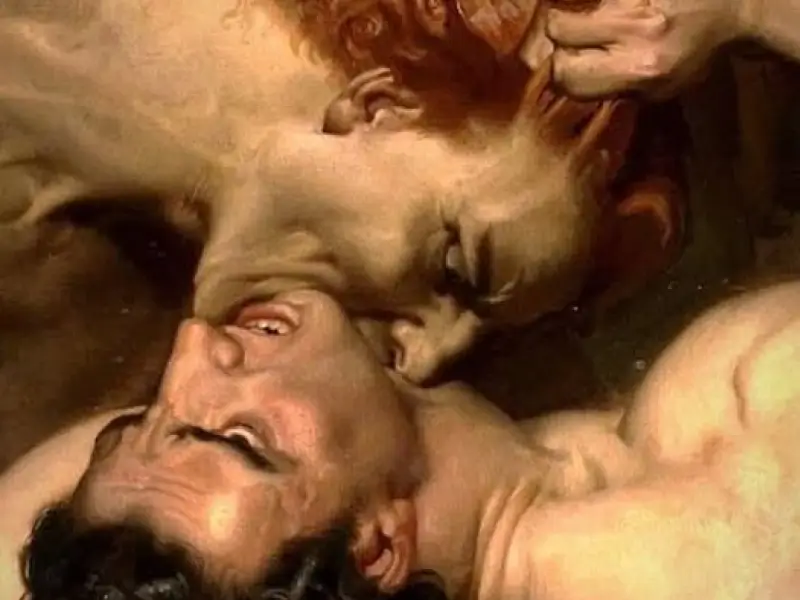
Dante and Virgil’s trip to hell comes to life in William-Adolphe Bouguereau’s 1850 painting, one of his most renowned works. The artwork depicts the Italian poet Dante, guided by Virgil, observing the suffering of two damned souls. While Dante and Virgil appear in the background, the central focus is the brutal punishment of Capocchio and Gianni Schicchi. The painting visualizes a scene from Dante Alighieri’s Divine Comedy, capturing the poet’s detailed moral universe and the punishments reserved for fraudsters in the 8th circle of Hell.
What the Painting Shows
Bouguereau’s piece captures Dante and Virgil as observers, while two souls are locked in combat. Capocchio, a chemist known for counterfeiting gold, suffers a gruesome punishment as his neck is bitten by Gianni Schicchi, who impersonated a dead man to steal his inheritance. The painting’s background features a winged demon overseeing the punishment, highlighting the vivid allegorical representation of Hell in Dante’s epic poem.
The Literary Source: Dante’s Divine Comedy
The scene comes directly from Divine Comedy, written in the early 14th century. Dante is guided through the circles of Hell by Virgil, witnessing sinners endure punishments matched to their crimes. This story has inspired countless artworks, and Bouguereau’s interpretation emphasizes both the moral lesson and the dramatic intensity of Dante’s vision.
Understanding Hell in Dante’s World
In Dante’s framework, Hell is structured by sin. The 8th circle, where Capocchio and Schicchi reside, punishes falsifiers and counterfeiters. These souls suffer eternal torment to reflect the moral consequences of deceit. The painting reinforces the symbolic logic of punishment and the concept of divine justice prevalent in medieval European thought.
Artistic Details and Symbolism
Bouguereau’s careful realism brings the scene to life. Dante and Virgil are painted as calm observers, contrasting with the violent struggle of the damned. The winged demon symbolizes malevolent oversight. Light, shadow, and composition guide the viewer’s eye, emphasizing the moral and emotional weight of the scene while showcasing Bouguereau’s technical skill.
The Broader Context of 19th-Century Historical Painting
In the 19th century, artists like Bouguereau were inspired by literary classics, aiming to merge historical narrative with moral instruction. This painting reflects the era’s fascination with allegory, the human form, and moral storytelling. By translating a literary scene into a visual one, Bouguereau connects literature, morality, and visual art for contemporary audiences.
Tags: bouguereau-painting, divine-comedy, dante-alighieri, 19th-century-art, hell-in-art